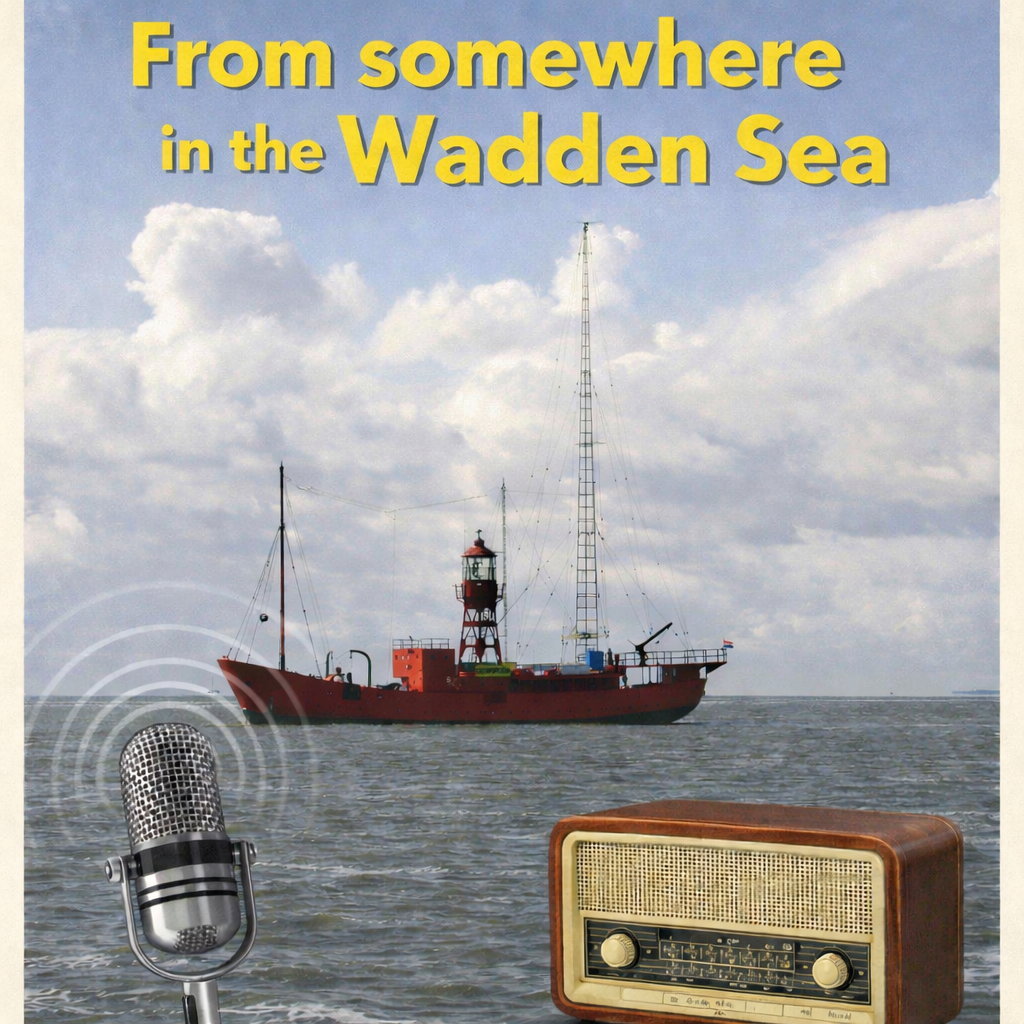
Radio Seagull: Diesel is too expensive for this year’s offshore broadcasts

De belangrijkste mededeling tijdens de medewerkersbijeenkomst op 21 maart 2026 was dat het besluit genomen is om deze zomer niet buitengaats te gaan. Door de stijging van de dieselprijs zouden onze generatoren zo’n € 300,- per dag verstoken en dat 5 weken lang.

Er wordt nog nagedacht over eventueel een veel kortere periode te gaan, maar dat is allerminst zeker. Inclusief het organiserende comité was iedereen teleurgesteld maar werd de wijsheid van het besluit ook ingezien. Het is zoals het is.
Bijna alle activiteiten die aan boord gepland waren, zoals de radiouitzendingen, gaan gewoon door. Alleen op een andere plek.

Er is besloten niet vijf weken naar zee te gaan, dat heeft inderdaad alles te maken met de extreem hoge dieselkosten. De generatoren zorgen, met het huidige prijsniveau, voor een kostenpost van € 300 per dag. Dat is niet op te brengen. Echter, het volledige programma (inclusief uitzendingen) gaat gewoon door en het schip is te bezoeken. Daarvoor hoeven nu geen tenders te worden geboekt, maar kun je tijdens openingsuren gewoon aan boord stappen.

Bron: Radiolichtschip Facebook page, radiotrefpunt.nl

————-

The key announcement at the staff meeting on 21 March 2026 was that the decision had been taken not to go offshore this summer. Due to the rise in diesel prices, our generators would consume around €300 a day for five weeks.

We are still considering the possibility of going for a much shorter period, but that is by no means certain. Everyone, including the organising committee, was disappointed, but the wisdom of the decision was also recognised. It is what it is.
Almost all the activities planned on board, such as the radio broadcasts, will go ahead as usual. Just in a different location.

It has been decided not to go to sea for five weeks; this is indeed entirely due to the extremely high diesel costs. At current price levels, the generators would incur a cost of €300 per day. That is simply unaffordable. However, the full programme (including broadcasts) will continue as normal and the ship is open to visitors. You no longer need to book a tender to visit; you can simply board during opening hours.

———-

Die wichtigste Mitteilung während der Mitarbeiterversammlung am 21. März 2026 war, dass beschlossen wurde, diesen Sommer nicht auf See zu fahren. Aufgrund des Anstiegs des Dieselpreises würden unsere Generatoren etwa 300 € pro Tag verbrauchen, und das über einen Zeitraum von fünf Wochen.

Es wird noch darüber nachgedacht, möglicherweise für einen viel kürzeren Zeitraum zu fahren, aber das ist keineswegs sicher. Einschließlich des Organisationskomitees waren alle enttäuscht, erkannten aber auch die Weisheit der Entscheidung. Es ist, wie es ist.
Fast alle Aktivitäten, die an Bord geplant waren, wie beispielsweise die Radiosendungen, finden wie geplant statt. Nur an einem anderen Ort.

Es wurde beschlossen, nicht fünf Wochen auf See zu fahren; das hat in der Tat ausschließlich mit den extrem hohen Dieselkosten zu tun. Die Generatoren verursachen bei dem aktuellen Preisniveau Kosten in Höhe von 300 € pro Tag. Das ist nicht zu stemmen. Das gesamte Programm (einschließlich der Sendungen) läuft jedoch wie geplant weiter, und das Schiff kann besichtigt werden. Dafür müssen jetzt keine Tender mehr gebucht werden, sondern man kann während der Öffnungszeiten einfach an Bord gehen.

Actie om geld op te halen voor Jenni Baynton gaat niet door: diesel is te duur

Het was zo’n mooi plan: het rode lichtschip Jenni Baynton uit Harlingen zou de zee weer op gaan, om van achter het anker radio-uitzendingen te maken.
Zo wilde de stichting achter het schip geld ophalen voor het onderhoud, dat hoog nodig is. Maar het gaat niet door. De diesel is te duur.

De Jenni Baynton is het laatste schip dat nog radio uitzendt. Het heeft een vergelijkbare geschiedenis als die van Radio Veronica.
Het begon als varende vuurtoren in 1949. Daarna is het nog een discotheek geweest toen het in Rotterdam lag.
In 2005 kocht de stichting Vrienden van het Lichtschip het en de vrijwilligers maakten er weer een functioneel schip van. Tussen 2005 en 2015 was bijvoorbeeld Radio Waddenzee vanaf het schip te horen.

Vijf weken lang zou het schip op de Waddenzee voor anker gaan. Niet alleen om radio te maken, maar ook voor andere culturele evenementen.
En hoewel de motoren van het schip niet veel diesel gebruiken als het voor anker ligt, is er wel stroom nodig. Die wordt op het oude schip ook met diesel opgewekt.

Geld bijleggen
Volgens het bestuur van de stichting Vrienden van het Lichtschip is de dieselprijs de laatste tijd zo hoog geworden, dat de kosten voor de stroom aan boord kunnen oplopen tot 300 euro per dag.
Dan zou de hele actie geen geld meer opleveren, maar zou er geld bijgelegd moeten worden.

Werfbeurt
Het geld zou gebruikt worden voor een werfbeurt. De laatste werfbeurt die het schip heeft gekregen, was in 2009. De stichting Vrienden van het Lichtschip wil het schip daarom weer opknappen.
Normaal onderhouden vrijwilligers het schip, maar voor een grote beurt moet hij naar een werf en de kosten om dat te kunnen doen, zijn hoog.

Van 1 juni tot en met 7 juli ligt het schip nu dus niet achter een anker op zee, maar met de trossen aan de wal in Harlingen. Dat heeft ook een voordeel, zegt het bestuur: het wordt voor bezoekers nu veel makkelijker om aan boord te stappen.

Mogelijk dat de trossen nog wel even los gaan tijdens de Tall Ships Races. Die zijn van 3 tot en met 6 juli in Harlingen.

Het bestuur onderzoekt nu of dat mogelijk is. “Dat mooie rode lichtschip als poortwachter bij de ingang van de haven om de zeilschepen welkom te heten heeft wel wat extra’s”, zegt het bestuur.

Bron: Omroep Fryslan 14 april 2026

Radio Seagull on Facebook
By Martin Wallis
14 April 2026

An article from our regional radio and TV station ‘Omrop Fryslan’ in the Frisian language:

It was such a great plan: the red lightship Jenni Baynton from Harlingen would go out to sea again, to make radio broadcasts from behind anchor. So the foundation behind the ship wanted to raise money for the maintenance, which is much needed. But it won’t continue. The diesel is too expensive.

The Jenni Baynton is the last ship that still broadcasts radio. It has a similar history to that of Radio Veronica. It started as a sailing lighthouse in 1949. After that, it was also a disco when it was located in Rotterdam.

In 2005, the Friends of the Lightship foundation bought it and the volunteers turned it into a functional ship again. Between 2005 and 2015, for example, Radio Waddenzee could be heard from the ship.

The ship would anchor in the Wadden Sea for five weeks. Not only to make radio, but also for other cultural events. And although the ship’s engines do not use much diesel when it is at anchor, electricity is needed. This is also generated on the old ship with diesel.

According to the board of the Friends of the Lightship foundation, the price of diesel has recently become so high that the cost of electricity on board can rise to 300 euros per day. Then the whole action would no longer generate any money, but money would have to be added.

The money would be used for a shipyard overhaul. The last shipyard overhaul the ship received was in 2009. The Friends of the Lightship foundation therefore wants to make the ship look good again. Volunteers usually maintain the ship, but for a major overhaul it has to go to a shipyard and the costs to do so are high.

From June 1 to July 7, the ship will not be anchored at sea, but with its ropes on the shore in Harlingen. This also has an advantage, says the board: it will now be much easier for visitors to get on board.

It is possible that the ropes will still be loose for a while with the Tall Ships Races. These will be in Harlingen from July 3 to 6. The board is now investigating whether this is possible. “That beautiful red lightship as a gatekeeper at the entrance to the harbour to welcome the sailing ships does have some extras”, says the board.